
The St. Clair County Weekly Arrest Log in Practice
The sheriff's site offers no weekly blotter, no date-range report, and no multi-day arrest summary. What it does offer is a live roster. Sorted by newest or oldest booking, it can stretch across several booking dates and multiple pages, which makes a workable substitute for anyone tracing St. Clair County recent arrests over a stretch of days. It only covers people still in custody, though, so it never amounts to a full count of the week's arrests.
The 48 Hour Release view covers the other end. It groups people by release activity rather than by arrest date, so a release card can point back to a booking made long before those two days. Treat the two lists as different tools. Mixing them into one running total turns a released-today page into something it is not: a booked-today log.
For a different angle, open the official roster sorted by oldest booking and work backward from the far end of the custody list.
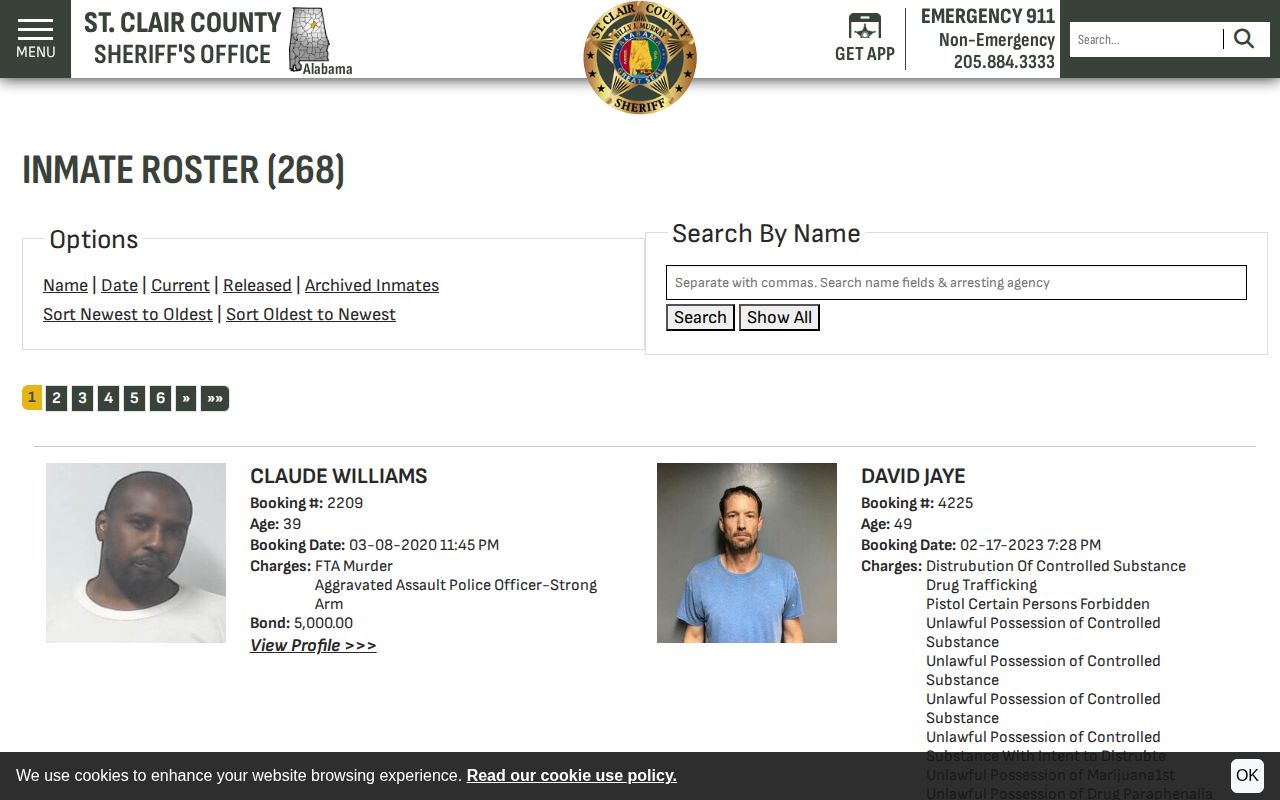
Sorting this way shows the full spread of dates sitting in current custody at the St. Clair County Jail. Just remember that the oldest active booking is a starting point for your search, not the earliest arrest in some countywide archive.
How to Read St. Clair County's Multi-Day Roster
Set your date range first. Treat the current roster as a custody-centered log and the release view as a status check, and never merge the two into a single arrest total, since the same booking can show up in both places.
- Open the current inmate roster and begin with newest booking time.
- Read the booking date on each card and move through result pages until the date falls outside your range.
- Use name or arresting-agency search when a specific person or department is known.
- Switch to oldest booking sorting only to understand the range of current custody, not to identify the first arrest of the week.
- Open the 48 Hour Release view and compare booking and release timestamps for a person no longer current.
- Record the booking number, then consult the court or sheriff records channel if the web window does not answer the question.
A live roster shifts hour to hour, so save the source URL and jot down when you checked it. A count you write down today may be stale by tonight. For the freshest bookings only, the Daily Arrest Report narrows the view to the newest entries first.
Fields in a St. Clair County Arrest Entry
Current-custody cards and release cards carry mostly the same fields. The release view alone adds a release date and time. Read each field for its narrow purpose:
| Field | How to read it |
|---|---|
| Name and age | Identity clues that still require care with similar names. |
| Booking number | The jail's booking identifier, separate from a court case number. |
| Booking date and time | The intake timestamp used to place an entry within a multi-day range. |
| Release date and time | A field on the release view showing when custody status changed. |
| Charges | Charges entered at booking. |
| Bond | Published bond information, which does not prove release or case outcome. |
| Photo and profile | The sheriff's displayed image and link to more detail, not evidence of guilt. |
You can search the roster by arresting agency, even though the cards do not display every incident-report detail. The booking record lives at the county jail. The incident report, by contrast, usually stays with the police department that made the arrest.
Weekend Arrest Review Without a Fixed Blotter
Cover both views after a weekend or holiday once offices are open again. The sheriff publishes no batch-update rule, no guaranteed daily cutoff, and nothing supporting a claim that arrests spike on any particular day in St. Clair County. Timing simply varies: intake wraps up at different hours, current custody rolls into release, and a card can carry a booking timestamp later than the actual arrest.
Pick your Friday cutoff and scan booking dates forward to the newest entries. Then check the release page for short stays. If you know the arresting agency, use that filter or ask the municipal department for its incident record. Moody, Pell City, and Ashville police post no public booking blotter of their own, so the county roster stands as the official jail source for people they send to the St. Clair County Jail.
St. Clair County Arrest Archives and Retention
The current roster and the 48-hour release view are publication windows, nothing more. An entry that drops off both lists has not been destroyed or expunged, and one that lingers says nothing about whether a charge is pending. The sheriff's office publishes no numeric retention period for roster cards, booking sheets, or booking photos.
For a past booking, file a focused request through the sheriff's published public-records procedure. Name the person, the approximate date, a booking number if you have one, the arresting agency, and the exact document you want. The office requires its standard form and proof of Alabama residency. It may redact or withhold material under state law, and it will not create a record that does not exist.
Broader retention rules sit with the Alabama Department of Archives and History through its local-government Records Disposition Authority search. Local records there follow approved retention and destruction procedures, but no St. Clair-specific duration for booking photos appears in that guidance. Older court material is a different errand entirely, usually running through the circuit clerk or the Alabama court system.
Split your request accordingly. Ask the sheriff for an existing booking sheet or maintained photo; ask the clerk for the docket tied to the court number. An agency may not hold every item, and an approved schedule does not promise that anything is online. Keep your request date and the response on file, so an old web copy never passes for the current official record.
Release Activity Is Not a New-Arrest Log
Think of the release page as the answer to a different question. For each person, it pairs booking date and time with release date and time. Charges, bond, booking number, age, photo, and a profile link sit right there too. That pairing helps when someone shows up in current custody one day and vanishes the next. You can reconcile the timeline without guessing. The official 48 Hour Release source opens that release-centered window for St. Clair County.
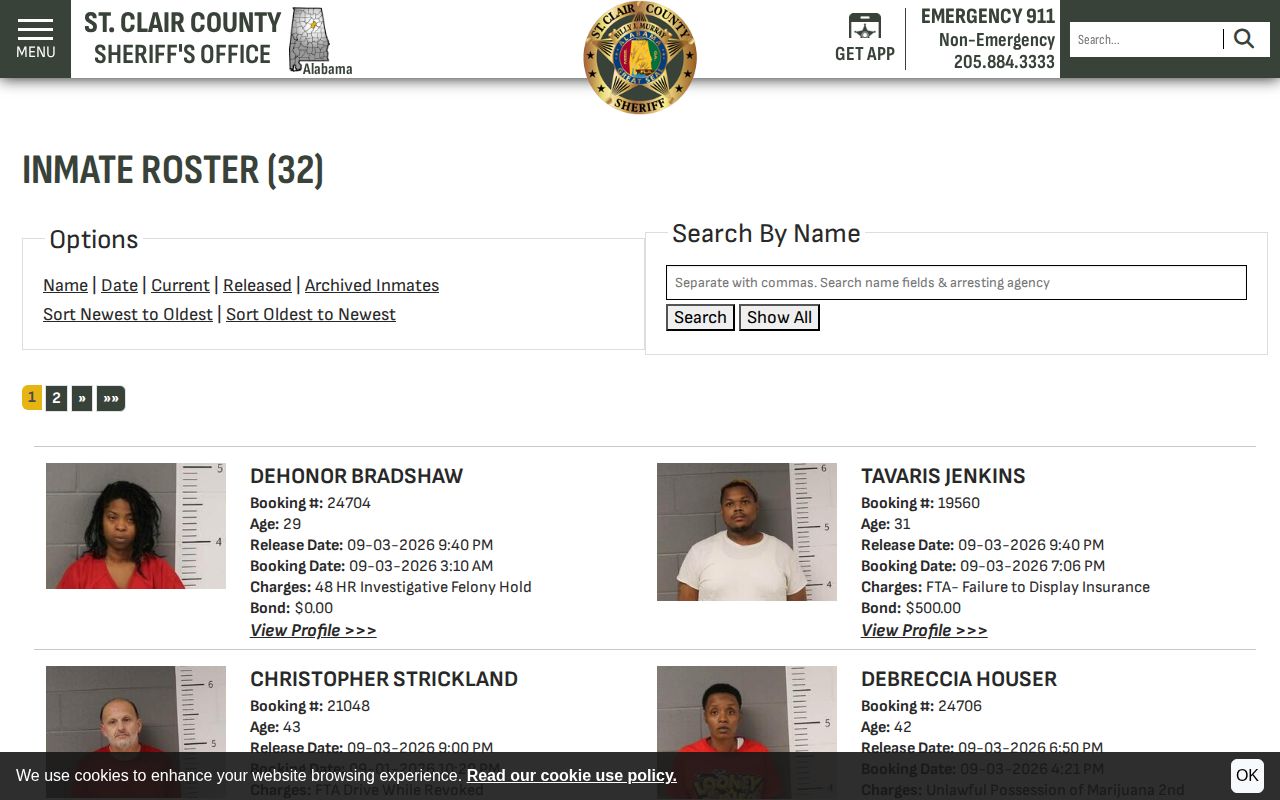
One caution: a release list is not an arrest count. People get out on bond or through other custody decisions, and the card never explains the court outcome. The sheriff's official corrections page notes that property bonds are handled at both the Pell City and Ashville offices. It also lists a $35 cash-bond transmittal fee to the Circuit Clerk under Act 2012-535. Those details explain the mechanics. They do not say why any one person walked out, and they say nothing about how a case ended.
Local News Is Event Coverage, Not an Arrest Archive
Newspapers and TV stations can help fill gaps when someone asks who was arrested in St. Clair County. The Trussville Tribune keeps a Pell City tag and files Moody-area reports, St. Clair News-Aegis and The Daily Home follow the county closely, and WVTM plus WBRC pick up bigger regional stories. Just know what you are getting. A newsroom chases events, so a major arrest or a courtroom update will land quickly while routine bookings go unmentioned. Treat these outlets as one thread in your search for St. Clair County arrests, not a substitute for a jail roster.
Coverage like the Trussville Tribune's Pell City page shows the pattern: stories appear when something happens, not on a daily booking schedule.
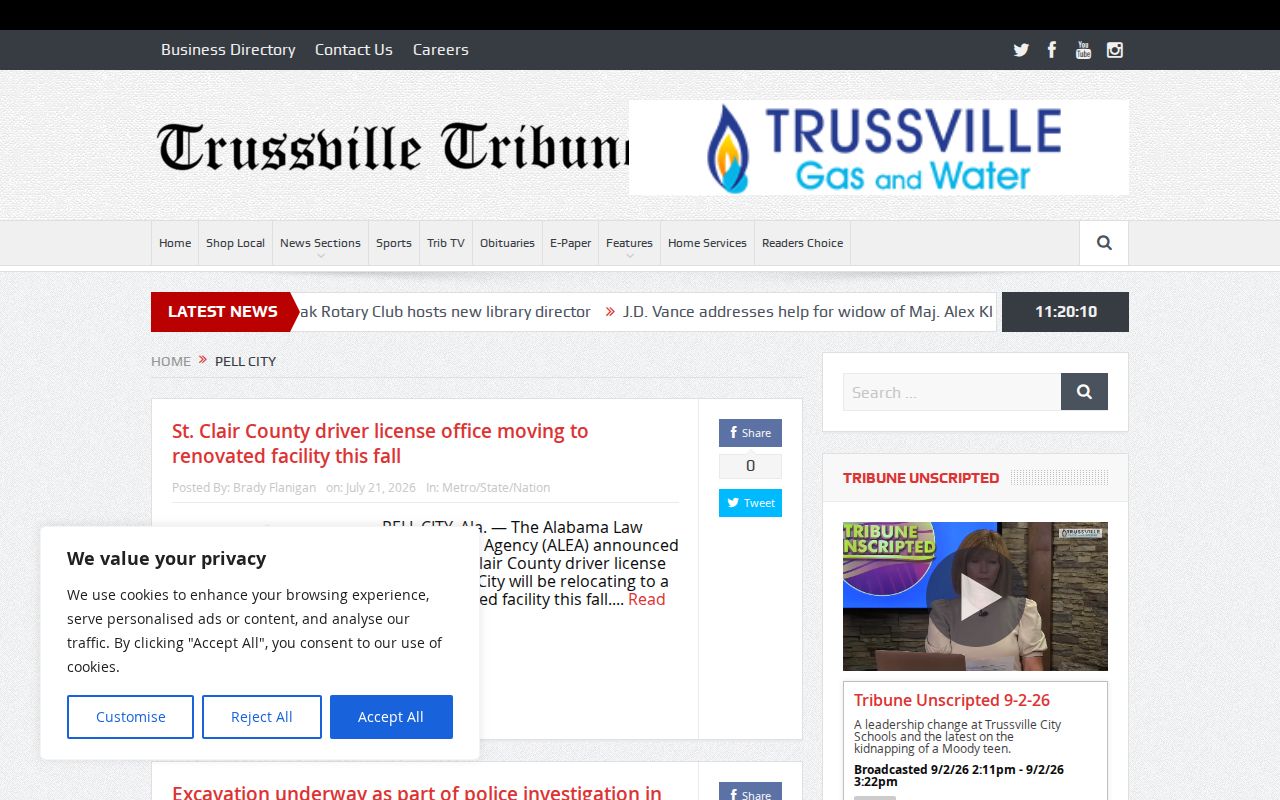
A news story has its own shelf life. It may carry a press-release image or a booking photo, and it stays online after the roster moves on. So check the publication date. Attribute claims to the agency named in the piece. Then go back to the sheriff and the court record for anything that matters. Third-party archives and reposted entries can be stale or thin. Treat them as leads, never as the official source for St. Clair County arrests.
Set Consistent Dates for the Weekly Arrest Review
Dates trip up a lot of weekly arrest reviews. Midnight crossings are the classic trap, so group entries by the displayed booking timestamp instead of a story's publication date. An arrest-event time, a jail intake time, a release time, and an article date can all disagree. Write down your start and end points first. Apply that cutoff to every roster page, then run the release view as its own pass. This method will not certify a weekly total from a live roster. It just keeps the St. Clair County review consistent and easy to explain.
Follow a Multi-Day Arrest Entry Into Court
A weekly arrest review eventually hits the edge of the booking system. The St. Clair Circuit Clerk runs Criminal, Traffic, Juvenile, and Warrants divisions, and Alacourt Just One Look offers paid access to many trial-court details. Search by county and name with care. Then compare the court case number and filed charge against the jail booking record. Expect friction. A case can post after the arrest log entry, and its charge wording may differ from the booking version. Chasing the disposition is the right move. Some documents never appear online, so the clerk remains the go-to contact for a missing court record.